
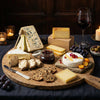
Dinner Party Cheeseboard: What to Serve and How to Plan It
, by Online Cheesemonger, 6 min reading time
, by Online Cheesemonger, 6 min reading time
Plan a dinner-party cheeseboard around your menu, with cheese choices, quantities, accompaniments and a calm preparation plan.
A dinner-party cheeseboard should fit the meal around it. After a rich main course, a few well-chosen cheeses can be a satisfying finish. If cheese is the centre of a relaxed supper, you will need more food and a different serving plan. Decide which occasion you are creating before choosing the cheeses.
The aim is a board your guests can share comfortably, with flavours they enjoy and enough variety to keep things interesting. Use our cheese selections for ready-made options, or put together your own combination from the full cheese range.
Cheese can replace dessert, follow it or become the main event. There is no need to serve both a substantial pudding and a very large cheeseboard simply because it is a dinner party. Think about how much your guests will realistically want by that stage of the evening.
If you are offering dessert as well, consider smaller cheese portions and a simple selection. For a cheese-led supper, add bread or oatcakes, fruit, condiments and other appropriate food. Let guests know what to expect so nobody arrives assuming the board is only a starter.
Check preferences in advance. Knowing that someone dislikes blue cheese or avoids a particular ingredient helps you choose a board they can enjoy. Keep dietary information practical and specific, using product labels rather than broad assumptions about cheese styles.
A firm cheddar, a creamy Brie-style cheese and a blue cover several textures. For a fourth option, choose a goat's, smoked or other soft cheese that adds a clear difference. You do not need a very large number of cheeses for the meal to feel special.
For a Scottish starting trio, compare Isle of Mull Cheddar, Clava Organic Brie and Arran Blue. Read the descriptions and current sizes, then adapt the selection to the guests rather than following a formula unquestioningly.
If most people prefer milder cheeses, make the gentler styles a larger share of the total. Offer a small portion of a more assertive cheese for those who enjoy it. A board should welcome the people at your table, not challenge them to finish a list of unfamiliar products.

For cheese after dinner, 60–100g per adult in total is a useful starting range. For six adults, an 80g allowance gives 480g altogether. Dividing that between three cheeses produces approximately 160g of each, although actual pack sizes may make a different split more sensible.
If cheese is a substantial part of supper, consider the larger 100–150g range and the rest of the menu. These are practical estimates rather than fixed servings. Appetite, the number of cheese eaters and the food already served matter more than an exact calculation.
Our portion guide has more worked examples. If you choose the Dinner Party Cheese Selection, check the current cheese weights before assigning a guest count. A selection's name does not establish how many people it will feed in every situation.
Offer plain oatcakes or biscuits so guests can appreciate the cheeses themselves. One alternative biscuit or some bread gives a choice without turning the table into a display of open packets. Keep crackers away from wet fruit and chutneys until they are eaten.
One or two condiments are usually enough. An onion chutney and a fruit-based option provide different possibilities, but there is no need to match a separate jar to every cheese. Serve small amounts in bowls with their own spoons.
Fresh pear, apple or grapes can give a lighter contrast. Add nuts only if appropriate for your guests, and keep them separate. If you are serving cheese after a full dinner, charcuterie may be unnecessary; if it is supper, it can help build a more substantial spread.
Choose a clean board or platter large enough for cutting space. Position the cheeses first, then add bowls and a modest amount of fruit. Put extra crackers in a basket nearby. Leave room for hands and utensils rather than filling every gap with decoration.
Give each cheese a knife or spreader. A soft cheese needs a different action from a firm wedge, and separate utensils keep strong flavours from spreading. Small name labels are useful when several cheeses look similar or guests want to remember a favourite.
For a long dining table, two smaller boards may be easier to share than one centrepiece that needs constant passing. Divide the selection fairly between them and keep reserve portions chilled. Practical presentation helps everyone participate without interrupting the conversation.
Before the day, confirm your guest list, dietary needs and order details. Check the current delivery information and leave suitable time before the meal. Make sure there is fridge space for the cheese when it arrives.
On the day, set out plates, knives, labels and empty serving bowls ahead of time. Keep cheese refrigerated according to its label until preparation. Cut only what is useful for serving, and let the portion for the table lose a little fridge chill where appropriate for that cheese.
During the meal, replenish small amounts if needed. Keep the original labels for storage and use-by guidance, and deal with unused cheese promptly. The board should be enjoyable without creating a large amount of avoidable waste the next day.
Either can work. Choose the order that suits your menu and guests, or serve cheese instead of dessert. The total amount of food matters more than following a particular convention.
Three contrasting styles can be plenty. Choose the total weight for the occasion first, then divide it between the cheeses. Add another style only if it offers useful variety.
Prepare the equipment and suitable components ahead, but keep chilled foods refrigerated until needed. Crackers are better added close to serving so they stay crisp.
No. The planned cheese allowance is shared across all varieties. Guests can taste a little of several cheeses or choose more of the styles they prefer.
Start with a ready-made cheese selection, then check its current contents and weights. Add only the accompaniments you need for your menu and the number of guests.