
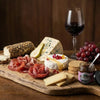
How to Build the Perfect Cheeseboard: A Complete Guide
, by Online Cheesemonger, 6 min reading time
, by Online Cheesemonger, 6 min reading time
Learn how to build the perfect cheeseboard with artisan cheddar, Brie, blue cheese, Scottish oatcakes, chutneys and charcuterie.
A great cheeseboard is less about piling on as many cheeses as possible and more about choosing a small number that give you different flavours, textures and strengths. With a little planning, an artisan cheeseboard can work just as well for two people on a relaxed evening as it does at a dinner party or family celebration.
This guide takes you through the cheese, quantities, accompaniments and serving order, using products and styles you can find at Online Cheesemonger.
For most cheeseboards, three different styles create enough variety without overwhelming the palate. A firm cheese, a creamy cheese and a blue cheese make a reliable starting point.
For the firm element, explore our artisan cheddar cheese. Cheddar can range from smooth and mellow to crumbly, mature and deeply savoury. A Scottish farmhouse option such as Isle of Mull Cheddar can give the board a distinctive centrepiece.
Next, add a creamy element. Our Brie and Brie-style cheeses provide a softer texture and gentler contrast. Options include Highland Fine Brie and Morangie Brie.
Finally, bring in a stronger flavour with an artisan blue cheese. Arran Blue Cheese is one Scottish option, while the wider collection lets you choose the intensity that suits your guests.

For a larger group, a fourth style can make sense. Rather than adding another similar cheddar or another Brie, choose something that changes the experience. A goat’s cheese, a characterful soft cheese, or a washed-rind cheese such as Minger can add a new texture and flavour profile.
This is also a good opportunity to showcase Scottish artisan cheese. Our Scottish cheese guide explores the different styles in more detail.
The right amount depends on the occasion. If cheese is a small course after a full meal, people will generally eat less than they would if the cheeseboard is the main event. As a practical planning range, around 60–100g of cheese per person can suit a smaller cheese course, while roughly 100–150g per person may be more appropriate for a substantial grazing occasion.
These are starting points rather than strict rules: consider appetites, how long the food will be available and what else you are serving. For larger gatherings, see our dedicated cheese portion guide.
A good cracker should support the cheese rather than compete with it. Traditional Scottish oatcakes and cheese biscuits provide crunch and make it easy for guests to sample different combinations.
Keep at least some of the biscuits fairly neutral. Strongly flavoured crackers can be enjoyable, but they can mask more delicate cheeses. Our Scottish oatcakes and cheese guide explains why the classic combination works so well.
A little sweetness or acidity can transform a mouthful of rich cheese. Browse our chutneys and pickles for cheese, but avoid covering every piece of cheese with a powerful accompaniment. Taste the cheese first, then add a small amount and compare.
Mature cheddar can generally stand up to more assertive accompaniments, while a delicate soft cheese may be better with something restrained. Our cheese and chutney pairing guide goes deeper into matching flavours.
If cheese is the main food rather than a final course, meats and charcuterie can turn the cheeseboard into a more substantial grazing spread. Smoked and cured meats add another savoury dimension, but leave enough space between foods so guests can identify what they are eating.
For a board where cured meats are a major feature, follow our cheese and charcuterie board guide.

A cheeseboard does not need to look perfectly symmetrical. Place cheeses with enough room to cut them comfortably, keep separate knives available where practical, and distribute biscuits and accompaniments so guests can reach them easily. Fresh fruit can add colour and freshness without requiring elaborate decoration.
It can also help to arrange cheeses roughly from milder to stronger. That gives guests a natural tasting route and reduces the chance that a powerful blue or washed-rind cheese overwhelms a delicate cheese at the start.
Always follow the storage instructions for the individual product. When appropriate for the cheese, taking some of the fridge chill off before eating can allow the texture and flavour to become more expressive. Do not leave perishable food sitting out for longer than is safe, particularly in a warm room.
Use a clean knife and avoid mixing pieces of strong blue cheese into mild cheeses. If you are serving a whole selection, labels can be useful so guests know what they are trying.
Wine is a classic option, but there is no single wine that is automatically best with every cheese. Intensity matters: a delicate soft cheese and a powerful blue cheese may call for very different partners. Our cheese and wine pairing guide provides a useful starting point.
For a distinctly Scottish tasting theme, cheese can also be explored alongside whisky. The important thing is to treat the drink and cheese as a pairing rather than assuming the strongest whisky should go with the strongest cheese.

If you do not want to choose every component separately, browse our cheese selections and gift sets. A curated selection is particularly useful for gifts, dinner parties or trying several artisan cheeses for the first time.
Three contrasting cheeses are enough for many occasions. A firm cheddar, creamy Brie-style cheese and blue cheese provide clear differences in texture and flavour. Add a fourth style for larger groups if it genuinely adds variety.
It depends on the role of the cheeseboard. Around 60–100g per person can be a useful starting range for a smaller cheese course, while a more substantial grazing occasion may need around 100–150g. See our full portion guide.
Oatcakes or biscuits, fruit and a small selection of chutneys or pickles are useful basics. Add charcuterie when you want a more substantial grazing board.
Rather than three cheeses with similar flavours, choose contrasting styles. Artisan cheddar, Brie-style soft cheese and blue cheese are a versatile combination, and you can adjust the exact products to suit how mild or strong you want the board to be.
You can organise many of the components in advance, but follow each cheese’s storage guidance and keep perishable items properly chilled until the appropriate serving time. Biscuits are best kept dry and crisp until you are ready to serve.
Ready to start choosing? Explore the full Online Cheesemonger range or begin with our curated cheese selections.